D. J. Stanton

Somewhere in Texas

Bucc-ees, the Texan right of passage. They have everything! If you want a garden chair, nuggets and a side order of gasoline, you can stretch your legs in the super massive gas station toilet hall!
3rd Novemeber 2023
Life in a Silver Bullet

Pulling up to the ranch was not what I had envisioned. Leaving the asphalt of the main road behind, a narrow, winding track guided us through open fields and sweeping prairie land. In the pitch black of the evening, our headlights illuminated a gravel drive leading past the main homestead, eventually coming to a halt at the edge of the property.
A Design Classic with British Roots
For those unfamiliar with American travel culture, an Airstream is an iconic travel trailer famed for its polished aluminium fuselage and aerodynamic curvature. Designed by Californian entrepreneur Wally Byam in the late 1920s, their lightweight durability was engineered to reduce wind resistance on long-haul road trips, cementing them as a romantic staple of American cinematic history.
My temporary dwelling was a 1960s model, complete with an unexpected quirk: original British wiring. Inside, the space was efficiently organised with a double bed extending against the far wall, a modest galley kitchen, a small sofa, and a compact washroom at the rear.
After months travelling through basic lodgings in South America, the trailer felt like relative luxury.
The track opened into a small gravel car park adjacent to a large wooden house overlooking the expanse. To its left stood a colossal, classic red barn, and tucked beside that was a long, gleaming silver Airstream. Clarke, my host, explained that this mid-century trailer would serve as my home for the month—and later Julia’s, once she arrived from Austin.

Operating out of the cozy Airstream that served as our home on the ranch, Julia’s arrival brought a renewed sense of purpose and companionship to the project. While I was focused on the heavy physical labor outside, she transformed the Airstream’s small sofa into a digital workspace. She worked closely with Clarke to design a clean, professional website to promote his vision for a self-sustaining farm and dropout school. Later on, she also used her artistic talents to hand-paint beautiful signs for the property, perfectly complementing the rustic environment with her digital and creative contributions.
Outside, the primary physical challenge was building a saloon-style gate and fence system entirely from recovered materials. The process was demanding and required chainsawing and shaping thick juniper logs to serve as sturdy posts. The wet, shifting ground made stabilizing the heavy wood a constant battle, but through trial, error, and some dry cement, the structure finally held. To finish it off, Julia and I created a beautiful mosaic cover for the gates using curved branches reclaimed from the previous winter, culminating in a highly rewarding DIY achievement.
The homesteading work soon shifted to beekeeping when Clarke tasked us with assembling wooden bee boxes. After a hasty first attempt with a nail gun that drew Clarke's rare anger, Julia and I carefully rebuilt the boxes to ensure a proper home for the colonies. This earned us a fascinating introduction to beekeeping; we donned protective suits, used a smoker to calm Clarke's hybrid Africanized bees, and extracted incredibly rich honey from the frames, scraping off the protective wax cappings which could then be repurposed for making candle wax.
However, our hard-earned honey harvest was remarkably short-lived. Back at the barn, we made the mistake of leaving the jars open after hosing ourselves down, and within thirty minutes, the resilient bees had marched in and recovered every drop of the honey, carrying it all the way back to their hives. Despite this humorous defeat, our time operating out of that Airstream—balancing the grueling chainsaw and fence work with apiary adventures and Julia's creative projects—forged an unforgettable and deeply rewarding chapter on Clarke's ranch.


Final Gate Build

Final days at Clarks ranch


30th November
State Pride


Austin
Ranch life


15th December
Ghosts of the Southern Plains: Blood, Dust, and Drums in the Hill Country

We had traded the high-altitude salt and dust of Argentina for the sprawling, sun-baked expanse of the Texas Hill Country. Our new home was a hundred-acre ranch on the outskirts of Austin, a place where the heat seemed to radiate from the very roots of the live oak and juniper trees. Back at Clarks, we took a copy of S.C. Gwynne’s Empire of the Summer Moon from the airstream. It quickly became our evening ritual; as the suffocating Texan heat finally broke into cooler nights, Julia and I would sit together, reading chapters aloud to one another.
Reading this history on the very soil where so much of it took place was surreal enough, but what made it staggering was the pure serendipity of our placement. Our host at the ranch was a direct blood relative of that very chief, Quanah Parker. If you had arrived expecting to step back in time, you would have been disappointed. There were no tipis, no traditional dress, and absolutely no overt visual signs of traditional Native American lifestyle on the property. It was simply a working Texas ranch. But the heritage was there, simmering just beneath the surface. Every evening, without fail, the heavy, rhythmic thud of drums and soaring vocals of traditional pow-wow music would echo from the main house. It was our host’s nightly ritual, a powerful, hypnotic soundtrack that drifted out over the pastures while Julia and I sat reading about the ghosts of his ancestors.
It is a harrowing, blood-soaked book. It chronicles the rise and fall of the Comanches, arguably the most powerful indigenous tribe in American history. For over two centuries, they were the undisputed lords of the Southern Plains. They halted the northward push of the Spanish empire, entirely stopped the French expansion from Louisiana, and terrified the early Texan rangers. Their power lay in their unparalleled mastery of the horse; they were, as the book describes, the greatest light cavalry the world had ever seen. The history is breathtakingly brutal—a relentless saga of raids, kidnappings, scalping, and a fierce, desperate defence of their way of life, culminating in the story of Quanah Parker, the legendary half-white, last and greatest chief of the Comanches.

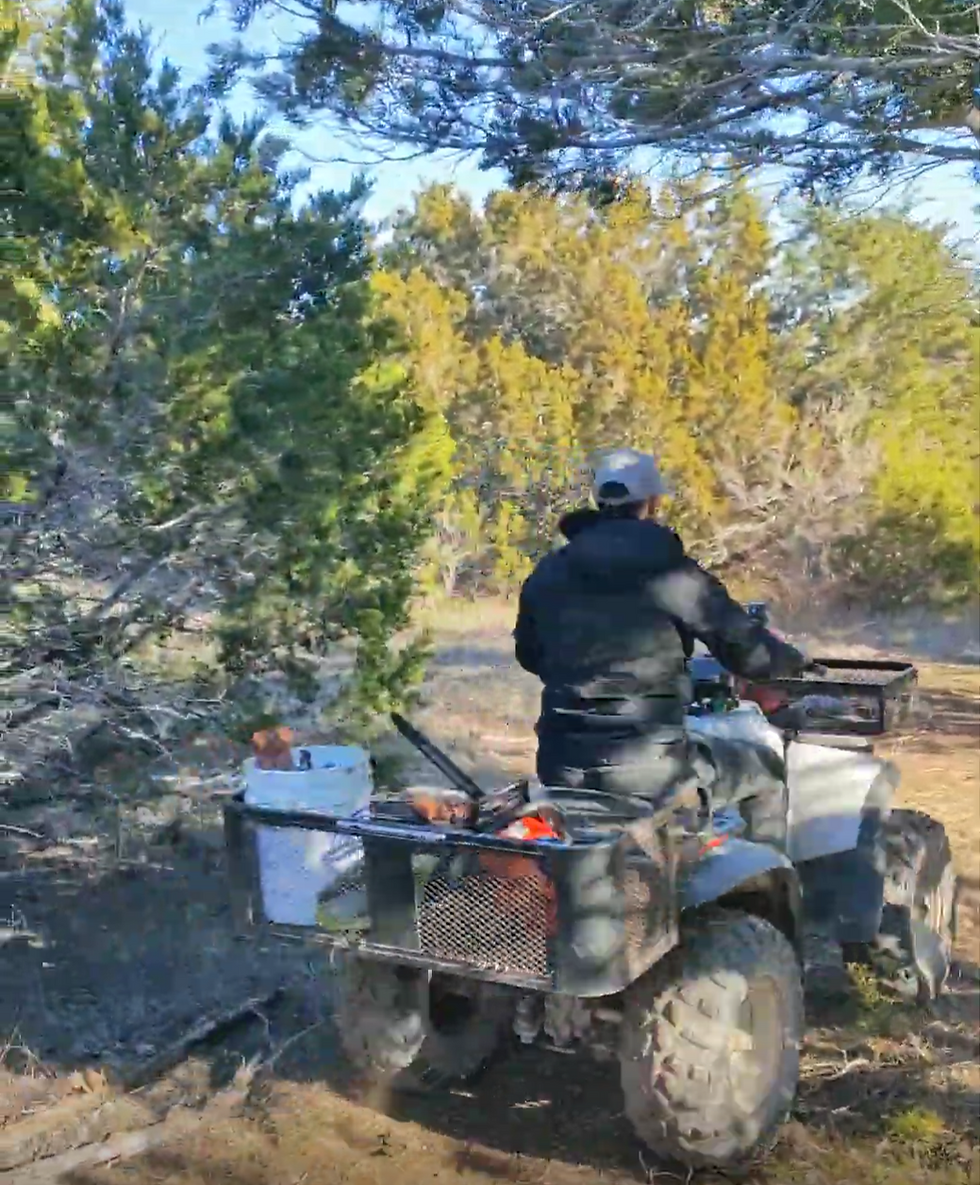
By day, however, history took a backseat to the graft. We had a hundred acres of land to maintain. Julia, rather fittingly on a Comanche descendant's ranch, found her rhythm in the stables, tending to the horses. I, meanwhile, was drafted into the canopy. I became the ranch's resident tree surgeon, tasked with a monumental cleanup operation following what our hosts simply called 'the snapping'. A historic, catastrophic deep freeze had recently paralysed Texas. The sudden, extreme drop in temperature had coated the region in thick, heavy ice. The weight of it had been too much for the native trees to bear, violently tearing massive limbs from the ancient live oaks and splintering trunks across the property. Now, the ice was long gone, replaced by the punishing Austin sun, but the devastation remained. My days were spent wrestling with chainsaws, hauling deadwood, and dragging colossal, splintered branches to the burn piles. It was exhausting, sweat-drenched work, clearing away the brutal aftermath of a Texas winter to make way for the summer, all while the history of the land echoed in the drums at night.
30th December
The Mountain Mural: A Homage to Julia’s Uncle

Today, I met Julia’s uncle for the first time. He is a man who works relentlessly to maintain his property, running a small chicken coop out the back and tending to the land with a quiet dedication. He is also a magnificent host. Each evening, after skilfully preparing a beautifully quirky spread of lasagne and English muffins, Julia and I would sit, utterly rapt, as he held court at the kitchen table.
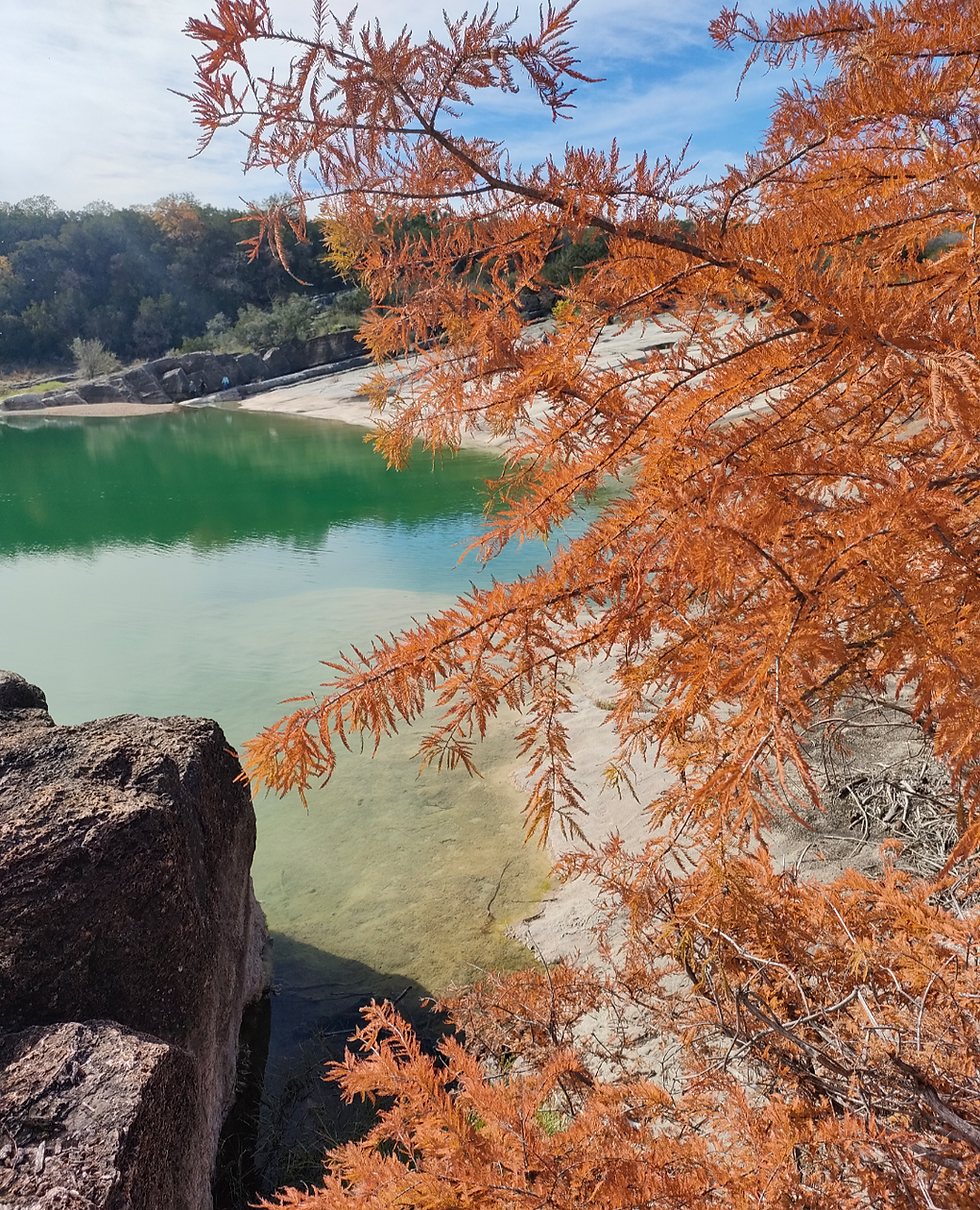
He shared tales of growing up as a ‘cult-baby’—a term he had coined himself to describe his youth. But his stories frequently shifted from the nostalgic to the harrowing growing up in the cult. He recounted his time serving in the military, and told surreal, gruelling stories of scaling mountains with nothing but ice cream strapped to his back. We visted one of the many swimming holes around Austin and he shared more stories of his time programming web 3.0.
His time as a 'cult-baby' had given him every opportunity to hate society instead he became a contributor, and he possessed a hard-earned wisdom that made him someone I quickly and profoundly admired. Before leaving, we wanted to leave a piece of ourselves behind for him. As a homage to his adventurous spirit, we put together a grand scene of Mount Aconcagua on his wall set to the Argentine flag.
January 2024
Red Clay Fields
We managed to plan and sand 80 16-foot juniper side panels in two weeks with our new hosts on their family home build. It smelt like sweet popcorn and looked like streaky bacon.